
Art Deco bathrooms offer a wide range of design options for your period style bathroom. Geometric patterns, clean straight lines, and rectangle shapes play a big part in this period style and reflect the influences of Cubism, Art Nouveau, and Fauvism.
Importance of Color in Art Deco
One of the most important interior design roles of Art Deco is the popular color choices used in bathrooms. Softer hues inspired luxury bathing with longer baths to enjoy the comfort of a fully equipped modern bathroom. One of the popular Art Deco bathroom colors during this era was the pre-WWI jadeite color known as Ming green.
These included:
- Ming green and black
- Rose pink and black
- Blue and black
Wall Treatment With Tile and Paint
Many of the bathrooms used green or pink wall tile that were framed with border tiles in black. The tile typically covered three-fourths of the wall.
The border wall tiles were rectangle shaped to add greater contrast. A tile baseboard that is set between the wall and floor would either be the same color as the wall or black tile for a more dramatic effect. A tile baseboard could be used, but the cove base tile was the popular choice. The cove base tile featured a flared edge that created a watertight union between the floor and wall.
Paint was the favored choice for the exposed wall surface, since wallpaper of that era didn't usually fair well in a steamy environment. The exposed wall was usually painted either white or a light value of the tile color or a color to contrast with the tile, such as a pink wall paint for a green tile bathroom.

Select Your Bathroom Wall Tile
Once you decide on the color of your wall tile, you need to decide if you want to include a black border. You'll also need to decide on the color for the baseboard or cove base tiling. The next decision is the type of wall treatment you want for the exposed wall. This can be paint or a modern wallpaper. You don't need to worry about modern wallpapers withstanding steamy bathrooms. You can jazz up this room with an Art Deco geometric wallpaper pattern or choose a reflective one that sparkles like its 1920.
If you don't have tile in your budget, then consider creating your own interpretation by making frames out of molding to place on the walls. You can paint the walls and molding white and then paint the inside of the panels either Ming green or rose pink. There are paints specifically categorized as Art Deco paints or be bold and create your own version of an ideal bathroom color combination.
Flooring
The bathroom flooring was always a ceramic tile. One of the most popular color choices was a mosaic tile in black and white. A 2" hexagon tile was laid in a honeycomb design with a black hexagon spaced between a cluster of six white hexagon tiles.
Some bathroom designs didn't use a black accent tile and simply created a white mosaic floor. The floor tiles were traditionally small mosaics and for larger bathrooms, a black tile border was often created, giving the flooring a rug effect.
Pink, blue, Ming green, soft butter yellow, and other colored floor tiles were ushered in by the mid-1920s. These were still small mosaic sized tiling, often in square and rectangle shapes. Sometimes the tile setter/layer would create a pattern effect using a combination of square and rectangle tiles.

Pick Your Favorite Tile for Bathroom Flooring
Once you've decided on the main color you want for your bathroom, it's time to choose the floor and wall tiles. The wall tiles are traditionally larger than the floor tiles in an Art Deco bathroom chose The wall tiles were square with rectangle border tiles (usually black). Select the pattern and shape of the tiles you want for your bathroom flooring.
Bathroom Fixture Colors
White porcelain was the main color for bathroom fixtures prior to World War I (WWI). After the war, Art Deco sprang forward into the 1920s with a bathroom splash of colored fixtures. The colors were mostly subtle pale values that went well with the mainstay Art Deco bathroom colors of pink and green. In fact, the Ming green was a prominent choice for colored bath fixtures, but the rose pink reigned. Baby blue was a close third.
By the 1930s, baby blue had gained in popularity with either blue or pink being top preferred tile colors. Other available but less popular colors included soft yellow, pale lavender, and bold black.
Bathroom Fixture Styles
The bathroom fixtures were made of cast iron and coated with porcelain. Vitreous china was a coveted finish for the porcelain since it produced a protective high gloss and made the sinks, tubs, and toilets impervious to stains. These two finishes were available in the popular sink, tub, and toilet styles.
Pedestal Sink
Pedestal sinks were popular as Art Deco fixtures because they could be shaped and molded into works of art. There were two styles of pedestal sinks. One featured a rectangle shaped sink that featured a narrow flat surface on the sides with just enough space to set a razor, a jar of cold cream, or other toiletries while using the sink. The other style featured a round basin with a curve frame. There was very little flat surface around the basin for setting anything.

Console Lavatories
Console sinks or lavatories were very popular, and some came with a built-in 2" backsplash. The entire sink basin, splash back, and console were made out of vitreous china or porcelain. Console lavatories were attached to the wall and had two front porcelain legs for additional support.
Some lavatories were designed to set on a brass stand that was attached to the wall and also had two front brass legs. A double lavatory would usually feature two back legs and three front legs (one in center) for additional support.
Clawfoot Tubs
Most people think of clawfoot tubs for Art Deco and these were wildly popular during the Victorian era and remained popular throughout the Art Deco period. Some bathrooms featured a nook or alcove just for the tub to help block the chill. This concept evolved into the modern low profile rectangle tub with a tile surround and built-in shower. This new tub design was available during the Art Deco period, but the majority of the people couldn't afford to replace their functional tubs purely for a design update, so the clawfoot tub was prominent in most Art Deco bathrooms.
The clawfoot tub gives a nostalgic feel to the overall design and works well with the eclectic properties of Art Deco. These tubs were usually double-ended with the faucet and handles centered on the side of the tub. Later on, these were placed at one end of the tub. Another popular tub design was the clawfoot slipper tub that featured one end higher than the other for easier soaking comfort.

Shower
The clawfoot tub featured an oval shower rod suspended from the ceiling or attached to the wall beside the tub. The shower curtain could then enclose the inside of the tub.
Cage showers with an array of built-in sprays from the Victorian era were still in use. However, these cages set on a footed porcelain shower pan eventually gave over to niche/nook tile showers.
Other showers were about the same size as the footed porcelain pans, but were enclosed and entered through an arched or stylized opening. These were about the size of a closet and tiled to provide an enclosed showering experience. In more expensive homes, the separate shower was more elaborate and considered very modern with various shower spray heads. Some of these newer designs featured a half wall entrance that turned into a full walled showering area.
Faucets and Handles
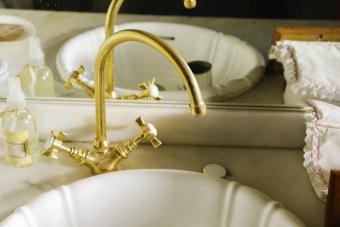
The faucets and handles were usually made of shiny glossy brass or if you wanted to show off just how rich you were, you opted for gold faucets and knobs/handles. Lesser extravagant bathrooms featured porcelain hot and cold handles/knobs. Gone were the two faucets sinks (one for hot and one for cold). The 1920s were all about innovation, and a central faucet/spout evolved to replace the more dated and difficult to use separate spouts. The hot and cold water combined so the heat factor could be better regulated when using the sink in particular.
Toilets or Commodes
Toilets or commodes were still limited in design and typically, design followed function. Pull-chain gravity fed toilets were still used since few people could afford to change for the newer two piece compact style with a lower tank. Some of the toilet bowls were quite ornamental designs for the bases, but these were limited to the wealthy.
How to Choose Your Bathroom Fixtures
First, decide on the styles you wish for your sink, tub, and if you're going for a separate tiles shower stall or prefer the shower curtain over your clawfoot tub. Once you make these style decisions, you need to choose the color of your sink and how far you wish to take your color scheme.
You can go nostalgic with a pull-chain toilet or a round front bowl. Either one will complete your bathroom with a sense of stepping back in time. True to the era, the majority of these designs used an oak casing for the water closet and a matching toilet lid.
You might decide that a brushed nickel, antique brass, or a shiny chrome finish suits your personal taste better than high gloss brass or gold colored faucets and handles/knobs. Don't be afraid to break from historical options. You must love your choices, so if gold or brass don't make you happy, choose the metal finish that will.
Mirrors
Mirrors were an elegant element for Art Deco, offering opportunities for artistic creations. The style of frameless mirrors added a new look to home interiors. These mirrors were larger and typically beveled glass. Venetian mirrors were especially popular with their unique designs of mirror frames. This design provided more light to reflect into a bathroom.
Cabinetry
The 1920s and 1930s were the time of Bungalow, Arts and Crafts, and Craftsman designs that took advantage of space by providing built-ins with glass-pane doors. Although very few bathrooms had built-in cabinets, there was one must have built-in for the bathroom - the recessed medicine cabinet. Any other cabinetry used in the Art Deco bathroom was a stand-alone piece of furniture. Look for authentic pieces with inlay designs reflecting geometric designs.
Built-In Medicine Cabinet
This unit was wooden and featured a glass knob on the door. The door had a beveled mirror insert, making this a very valuable addition to the modern bathroom. With little to no surface space on the pedestal or console sink, the medicine cabinet was a perfect place for toiletries. The medicine cabinet was placed above the sink so the homeowners could use the mirror while using the sink.

Select a Medicine Cabinet or Mirror
A reproduction medicine cabinet makes a nice touch. If you wish to be as authentic as possible, select one with a beveled mirror. If a medicine cabinet isn't an ideal addition for your bathroom, there is a wide range of various Art Deco mirrors. Select one that you like and hang it above the sink.
Lighting Fixtures
Art Deco introduced stylish geometric patterns in wall sconces. These were colorful glass designs. Angled V-shaped fan designs or a more elegant brass or bronze fixture with crystal prisms dangling from it. Other lights were made of shiny chrome metal rectangle grates with frosted glass. Glass slip shades in a stylized flush ceiling light and many other unique designs.
However, the majority of people didn't splurge on these high-style lighting fixtures. Instead, many ceiling lights for bathrooms were semi-mounted opal glass, also known as milk glass. Bathroom wall sconces often feature opal glass shades.
Decide on Your Bathroom Lighting
Choose the same metal for your lighting fixtures as that the faucets and handles to your bath fixtures. If you went with a brushed nickel or an antique brass, then select the same finish for your lighting fixture so your bathroom has a cohesive look. A pull-chain wall sconce with a shade directing the light downward was often set above the medicine cabinet. A more stylish look would be a set of wall sconces on either side of the cabinet.
Window Treatment
The window treatments for Art Deco varied. Stained glass, especially in geometric patterns, was very popular, but expensive. A bathroom might have a stained glass window in a more expensive home, but most had a simple square window or double sash window. Larger bathrooms may have featured a tall vertical single window. Many windows had frosted glass for privacy. Some windows were etched with geometric shapes in a frosted glass design. Roller shades were a common window treatment for a modest bathroom design. This was an inexpensive choice and provided instant privacy. Other choices were tiered curtains or simple gathered curtains that were easy enough to open and close.
Choose a Window Treatment
You can always use a window roller shade and a valance to add a little color and geometric pattern to your bathroom. Window film gives an inexpensive and effective look for privacy while allowing natural light into your bathroom. There are a few frosted, etched Art Deco window film patterns that you might want to try for a plain glass window.

Bathroom Accessories
The bathroom space didn't allow for very many accessories. You could add a few for a more authentic feel to your Art Deco bathroom design.
- A glass shelf was often placed between the sink and the medicine cabinet, either in an open style or with a retaining rail to prevent items from tumbling off the shelf.
- A small side table, painted one of the colors of your bathroom color palette can be placed by the sink to hold towels.
- A straight-back chair was often set near the tub for easy access to a towel or to sit while getting dressed. This chair was often a ladder back style and could be in a natural finish or painted.
- An over the side bathtub caddy was usually a wire basket design that featured a shelf for a bar of soap.
- A towel cabinet was usually a curio cabinet, dresser, or other separate piece of furniture commandeered to store towels, washcloths, and toilet paper.
Design Your Art Deco Bathroom
Decide on the color scheme you want for your bathroom and then begin shopping for each element such as wall and floor tile, bath fixtures, lighting, and accessories. Your Art Deco bathroom design will soon begin to take shape into a stylish bathroom you'll enjoy using.


